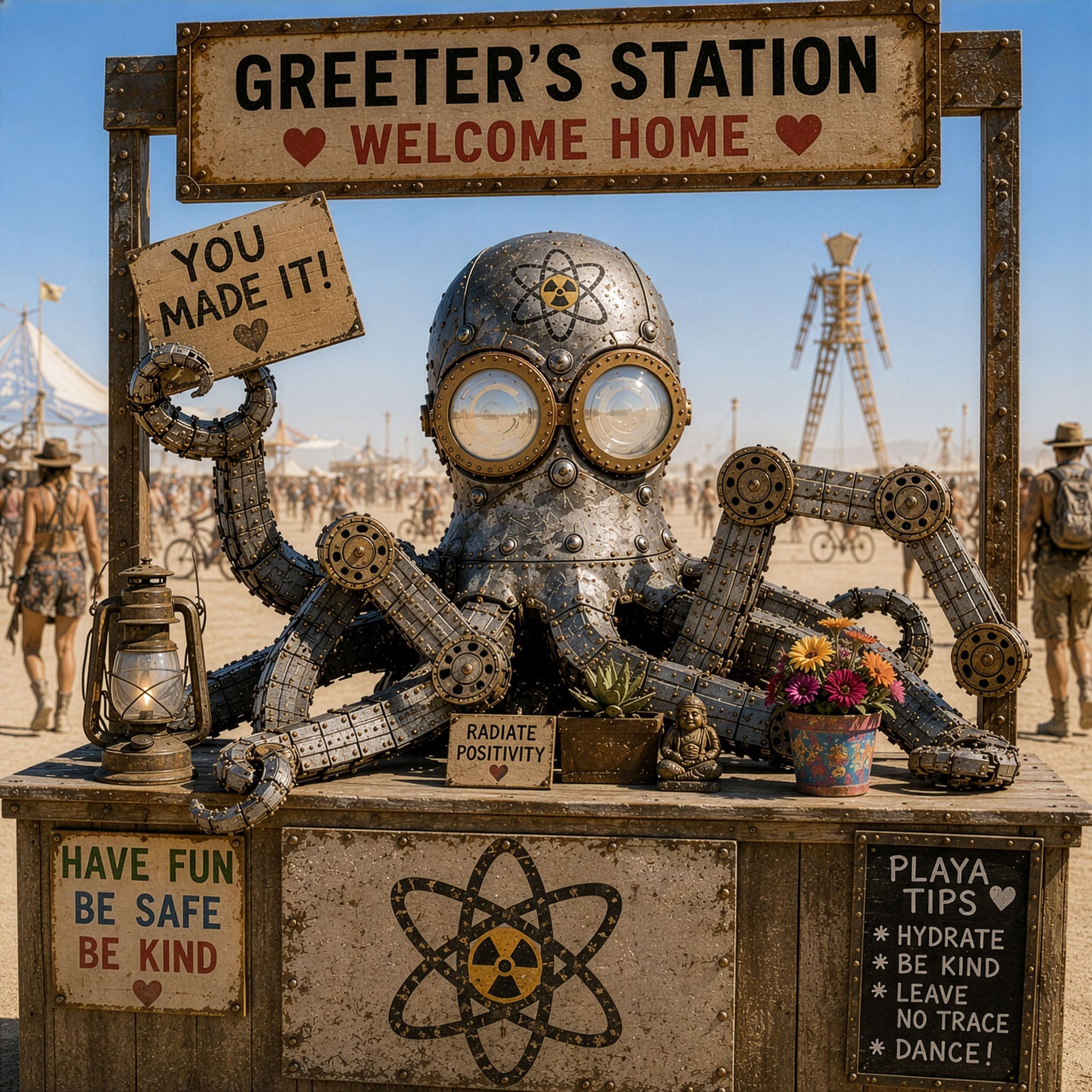
Every year, tens of thousands of people travel to one of the harshest environments in North America. An important principle for all participants is Leave No Trace, which encourages everyone to protect and preserve the landscape. They built a temporary city in the middle of Nevada’s Black Rock Desert. For one incredible week, that city becomes home to art, music, creativity, generosity, and community. Then, almost as quickly as it appeared, it disappears.
That remarkable transformation only happens because Burning Man embraces one simple but powerful idea: Leave No Trace.
Unlike most festivals, Burning Man does not rely on crews of workers to clean campsites after everyone goes home. Instead, participants take responsibility for everything they bring to the playa. Every camp, every art project, and every vehicle owner helps protect the Black Rock Desert by cleaning up after themselves.
That shared responsibility makes Burning Man different. It also makes it special.
At first, Leave No Trace can sound intimidating. After all, there seems to be a lot to remember. Fortunately, the reality is much simpler. Once you build a few good habits, Leave No Trace becomes second nature. In fact, many Burners discover that these habits improve the way they camp, travel, and even live at home.
This guide explains everything you need to know. Whether you are attending your first burn or your fifteenth, these tips will help you protect the playa while making cleanup easier for yourself and everyone around you.
Why Leave No Trace Matters
The Black Rock Desert looks empty at first glance. However, it is anything but lifeless.
This unique playa supports wildlife, delicate ecosystems, and even microscopic life that survives in remarkable ways. Every year, Burning Man works closely with the Bureau of Land Management to ensure that Black Rock City disappears without permanently damaging the desert.
That commitment is one reason Burning Man continues to receive permission to return each year.
Leaving trash behind does more than create an eyesore. It can damage the environment, create hazards for wildlife, and make future events more difficult to organize. Every participant shares responsibility for protecting the playa.
Fortunately, most Burners embrace that responsibility with pride. Rather than asking, “Who will clean this up?” they ask, “How can I prevent this from becoming a problem in the first place?” That attitude creates one of the cleanest large gatherings anywhere in the world.
Leave No Trace Is One of the Ten Principles
Burning Man’s Ten Principles help shape the culture of Black Rock City. Among them, Leave No Trace stands out because everyone participates. Camps, teams building art installations, mutant vehicle crews, volunteers. Every participant contributes.
The principle is simple.
“Our community respects the environment. We are committed to leaving no physical trace of our activities wherever we gather.”
Those words influence nearly every decision Burners make before, during, and after the event.
Instead of assuming someone else will clean up, participants plan ahead. They reduce waste before arriving. They clean continuously throughout the week. Finally, they perform careful inspections before leaving.
Those small actions add up to something extraordinary.
What Is MOOP?
One of the first terms new Burners learn is MOOP. It stands for Matter Out Of Place. The definition is wonderfully simple. Everything that does not naturally belong in the Black Rock Desert is MOOP.
That includes obvious things like:
- Food wrappers
- Bottle caps
- Zip ties
- Cigarette butts
- Broken tent stakes
- Plastic packaging
However, MOOP also includes surprisingly tiny items, such as:
- Glitter
- Sequins
- Feathers
- Loose faux-fur fibers
- Wood chips
- Sawdust
- Metal filings
- Twist ties
- Confetti
- Bread ties
In other words, if you brought it with you, it is your responsibility to take it home. Even something as small as a single zip tie clipped from a cable counts as MOOP. The good news is that preventing MOOP usually takes only a few extra seconds. Those few seconds can save hours of cleanup later.
Pack Smart Before You Leave Home
One of the easiest ways to practice Leave No Trace starts long before you reach the playa. It begins while packing. Look carefully at everything you plan to bring. Then remove as much unnecessary packaging as possible before loading your vehicle.
Cardboard boxes, plastic wrap, retail packaging, twist ties, and disposable containers all become future trash. If you recycle or dispose of them at home, they never become a problem in camp.
Think about it this way.
The less you pack in, the less you have to pack out.
That simple idea saves space, reduces clutter, and makes final cleanup much easier. Many experienced Burners even repackage food into reusable containers before leaving home. As a result, they generate far less trash throughout the week. Small improvements like these make a surprisingly big difference.
Note that if your camp is doing any food gifting or is getting a health permit, there are some rules you need to follow. Check the Central NV Health Dept web site for guidelines, and check with a camp lead if your group has one when it comes to anything for public service.
Avoid Bringing Glass To The Playa
Another easy way to practice Leave No Trace is to avoid bringing glass to the playa whenever possible. A broken bottle, jar, or drinking glass can scatter tiny shards across the playa, making complete cleanup extremely difficult. Fortunately, there are plenty of alternatives. Even fans of fancy craft beer can find an impressive selection in cans these days. Choose aluminum (which you can take to recycle camp), reusable plastic, or other durable containers instead. Your feet, your campmates, and the Playa Restoration crew will all appreciate it.
Brush Out Faux Fur Before the Playa
Burning Man encourages creativity and radical self-expression. Many people get sewing and wear faux-fur coats, leg warmers, capes, hats, and other colorful playa fashion. Unfortunately, brand-new faux fur often sheds loose fibers where the material was cut and sewn. Those tiny fibers become nearly invisible MOOP.
Fortunately, preventing the problem is easy. Spend a few minutes brushing or shaking out new faux-fur clothing before packing it. Remove as many loose fibers as possible while you are still at home. That quick preparation dramatically reduces fuzzy MOOP during the event. It also keeps your camp cleaner throughout the week. When you think about what to wear, think about MOOP consequences.
Bring Plenty of Heavy-Duty Trash Bags
Trash bags may not be exciting. However, they might become one of the most valuable items you pack. Choose heavy-duty contractor bags or similarly durable trash bags. They cost a little more, yet they offer tremendous peace of mind. After all, nobody wants a week’s worth of camp garbage ripping open inside their vehicle during the drive home.
Even worse, nobody wants trash blowing across the Nevada highway because a bag failed. Strong bags reduce those risks considerably. Use separate bags for different kinds of waste whenever practical. Doing so makes packing easier and helps prevent unpleasant surprises at the end of the week.
Bring a Few Buckets and Lids
Another inexpensive item can solve countless playa problems. Bring several sturdy five-gallon buckets along with matching lids. Most home improvement stores sell them at reasonable prices. Their usefulness cannot be overstated. Buckets can temporarily store:
- Gray water
- Cleaning supplies
- Emergency spills
- Wet towels
- Dirty equipment
- Camp tools
They also help when accidents happen. Sooner or later, something spills. Maybe someone knocks over a really messy drink. nPerhaps cooking grease splashes onto the playa. Occasionally, something much messier happens. Whatever the situation, do not simply cover it with dust. Pick it up. If the spill is larger than a handful, use a shovel or scoop.

Remove both the spilled material and a small buffer of surrounding playa. That extra margin helps ensure that everything contaminated gets packed out properly. It only takes a few minutes, and it protects the desert for everyone who comes after you.
Leaving No Trace Once You Arrive On Playa
By the time you arrive in Black Rock City, you’ve already done some of the most important Leave No Trace work. You’ve packed thoughtfully, reduced unnecessary waste, and brought the right supplies to help keep your camp clean.
Now it’s time to put those preparations into practice. Fortunately, Leave No Trace is not about spending hours cleaning every day. Instead, it is about developing simple habits that become part of your routine. A few minutes of attention each day will save hours of work when it is time to pack up and head home.
Before long, you’ll discover that caring for the playa feels just as natural as brushing your teeth or washing your dishes.
Even Water Leaves a Trace
One of the biggest surprises for first-time Burners is learning that even water can leave a trace. It sounds strange at first. After all, water seems harmless. However, the playa is unlike almost any other environment on Earth. What seems harmless somewhere else can have lasting effects in the Black Rock Desert.
Gray Water Matters
Water that has been used for washing dishes, showering, cleaning equipment, or brushing your teeth is known as gray water. Although it may look clean, gray water often contains:
- Soap residue
- Toothpaste
- Food particles
- Oils
- Sunscreen
- Dirt
- Cleaning chemicals
Those materials do not belong on the playa. As a result, every participant needs a plan for collecting and removing gray water. Small camps often find that a combination of evaporation ponds and five-gallon buckets works well. The remaining water can then be transported home for proper disposal.
Larger theme camps usually need more elaborate systems. Many camps also arrange for approved Outside Services (OSS) vendors to remove gray water during the event. Those services should be reserved well before arriving in Black Rock City (many providers get fully booked several months in advance).
Planning ahead makes managing gray water surprisingly easy.
Clean Water Deserves Respect Too
Many people assume that plain water is safe to dump onto the playa. Unfortunately, that is not true. One fascinating reason involves one of the smallest residents of the Black Rock Desert.
Protect the Fairy Shrimp
Beneath the hard surface of the playa lie thousands of dormant fairy shrimp eggs. These remarkable creatures have adapted to survive in one of the harshest environments imaginable. Their eggs can remain dormant for years. When enough water naturally fills the playa, those eggs hatch. The fairy shrimp (also known as anostroca) complete their life cycle before the lake eventually dries once again.
However, dumping a large cooler full of water or several buckets onto one spot can fool those eggs into thinking a lake has returned. The eggs hatch. Unfortunately, without a real lake, the tiny shrimp cannot survive and there will be no fairy shrimp festival for them.

That is why Burners should never pour large amounts of water onto one location. Instead, spread clean water over a wide area whenever possible. A simple watering can works beautifully. Rather than creating one large puddle, it gently disperses the water across the surface. That simple step greatly reduces the impact on the delicate ecosystem below.
Sometimes the smallest actions make the biggest difference.
Build Daily Leave No Trace Habits
Many first-time participants think cleanup happens on the last day of Burning Man. Experienced Burners know better. The cleanest camps do not wait until Exodus.
Instead, they clean continuously throughout the week. That approach keeps camp organized while preventing small problems from becoming large ones. Imagine dropping one zip tie on Monday. Then another bottle cap on Tuesday. A loose feather escapes on Wednesday. Someone accidentally leaves a wrapper near the kitchen on Thursday. By Sunday, those tiny pieces have disappeared into the dust.
Finding every single item becomes much more difficult. Instead, spend just a few minutes each day looking around camp. The work goes quickly. More importantly, it becomes part of everyone’s routine.
Assign a Daily MOOP Leader
Even small camps benefit from assigning someone to think about Leave No Trace each day. That person does not spend the entire day picking up trash. Instead, they simply remind campmates to stay aware.

At Atomic Octopus, the role rotates throughout the week so everyone shares responsibility. A quick walk around camp each day only takes a few minutes, yet it catches problems before they grow into bigger cleanup jobs.
Daily checks might include:
- Picking up loose debris
- Emptying trash containers
- Checking common areas
- Looking under tables and chairs
- Inspecting tent entrances
- Watching for blowing materials
Because everyone participates, no one feels overwhelmed. More importantly, final cleanup becomes dramatically easier.
Recycling and Composting Make Leave No Trace Even Better
Practicing Leave No Trace does not mean that everything you pack out needs to become trash. Burning Man participants have several opportunities to divert useful materials from the waste stream. One of the longest-running examples is Recycle Camp, where participants can bring aluminum cans for recycling. Collect your empty aluminum cans separately throughout the week, then bring them to Recycle Camp at 5:35 & Esplanade between 9:00 a.m. and 5:00 p.m. daily. Keeping a separate container for cans at camp makes the process easy. It also keeps recyclable aluminum out of your regular trash bags.
Food scraps can get some love too. The Black Rock Compost program provides another way for camps and participants to reduce the amount of waste they haul away. Instead of sending suitable food scraps and other accepted organic material to a landfill, participants can collect them for composting. Because participation requires some advance planning, check the current guidelines before packing for the playa. You can find program information, instructions, and signups through the Black Rock Compost program. Composting happens at Camp Get Your Shit Together, located at 7:00 & A, between 3:00-6:00p.m. on Monday, Tuesday, Thursday, Friday and Saturday during burn week. Recycling and composting require only a little extra organization in camp. Once everyone knows which container is which, sorting becomes another easy habit. Better yet, these are Leave No Trace skills that participants can continue practicing long after they return home.
Wind Never Takes a Day Off
One thing every Burner quickly learns is that the wind has a mind of its own. A calm morning can become a windy afternoon. An ordinary breeze can suddenly become a dust storm. If something is loose, the wind will eventually find it. That means every camp should develop the habit of securing everything before leaving camp for the day.

Ask yourself a few quick questions.
- Is that paper plate weighted down?
- Are those empty boxes closed?
- Is that towel clipped to the line?
- Did someone leave a grocery bag sitting on the table?
These quick checks take less than a minute. However, they can prevent dozens of pieces of MOOP from escaping into neighboring camps or out onto open playa.
Smokers Should Bring a Pocket Ashtray
Cigarette butts remain one of the most common forms of MOOP at outdoor events. Fortunately, there is an easy solution. Many experienced Burners carry one of the small metal mint tins sold near grocery store checkout counters. After the mints are gone, the container becomes a perfect portable ashtray. These little tins easily fit into:
- A backpack
- A cargo pocket
- A jacket
- A utility belt
They safely hold:
- Cigarette butts
- Cigar ends
- Used tobacco pouches
- Matches
- Ash
Instead of wondering where to dispose of smoking waste, simply place it inside the tin until returning to camp. It is inexpensive, convenient, and incredibly effective.
Leave No Trace Is a Team Sport
One of the best parts of Burning Man is that Leave No Trace brings people together. Campmates naturally remind one another when they spot something on the ground. Someone bending over to pick up a bottle cap often inspires another person to grab a loose zip tie nearby. Before long, everyone begins noticing little things. Those tiny moments build a culture of responsibility. Even visitors often join in.
Many Burners instinctively pick up MOOP wherever they find it, even if it did not come from their own camp. That attitude speaks volumes about the community. Rather than asking whose trash it is, Burners simply remove it. The playa belongs to everyone. Protecting it becomes everyone’s responsibility.
Leave No Trace Becomes Easier Every Day
When newcomers first hear about MOOP, gray water, line sweeps, and cleanup procedures, the list can seem intimidating. Fortunately, reality feels very different. After a day or two, most participants stop thinking about the rules.
Instead, the habits become automatic.
Put things back where they belong.
Notice loose debris.
Secure equipment before the wind arrives.
Carry your trash until you reach camp.
Pick up something blowing across the street because it is simply the right thing to do.
That is the real beauty of Leave No Trace.
It is not about perfection, it is about mindfulness.
Every small decision contributes to something much bigger than ourselves.
And when tens of thousands of people each make those small decisions, an entire city can disappear almost without a trace.
Final Cleanup, Playa Restoration, Line Sweeps, Tools & Why They Matter
By the final days of Burning Man, Black Rock City has become a true home away from home. Camps have welcomed thousands of visitors. Art has inspired countless moments of wonder. New friendships have formed around coffee, music, and spontaneous conversations.
Eventually, however, every camp reaches the same milestone. It’s time to pack everything up.
For camps that practice Leave No Trace throughout the week, this final stage is surprisingly manageable. Because the camp stayed organized, there is very little left to do beyond packing equipment and performing one last careful inspection.
The goal is simple.
Leave your campsite looking as though you were never there.
Line Sweeps: The Final Step in Leave No Trace
One of the most effective Leave No Trace techniques is also one of the simplest. It’s called a line sweep. Just before everyone leaves camp, gather several campmates and spread out in a straight line across your entire camp footprint. Then begin walking slowly together. Keep only a few feet between each person. Watch the ground carefully. As you move forward, pick up anything that does not belong. That might include:
- Zip ties
- Bottle caps
- Twist ties
- Tent stakes
- Broken plastic
- Wood chips
- Loose feathers
- Bits of paper
- Small pieces of fabric
- Stray hardware

Because everyone moves together, very little escapes notice. If your camp has a larger footprint, perform multiple line sweeps from different directions.
Many experienced Burners also perform a second sweep after loading vehicles. It’s amazing how often something hidden beneath a table or storage bin suddenly becomes visible once camp begins disappearing. Those extra fifteen minutes can make all the difference.
Slow Down Before You Drive Away
Everyone feels the excitement of heading home. People are tired. Vehicles are packed. Friends are saying their goodbyes. Unfortunately, that excitement can also lead to mistakes.
Before you start your engine, take one final walk through your camp. Look underneath every vehicle. Check where tents once stood. Inspect the kitchen area. Walk the perimeter one last time. You will often discover one forgotten item that somehow escaped earlier inspections. Finding it now is much easier than leaving it behind for someone else to discover weeks later.
Great Tools Make Leave No Trace Easier
Over the years, our camp has discovered a handful of inexpensive tools that make Leave No Trace faster, easier, and much more effective. None of them are complicated. However, together they can save hours of work.
Build a Trash Fence
One of our newer additions has been a short section of bright orange plastic trash fence. If you’ve ever seen the famous orange perimeter fence surrounding Black Rock City, you’ll recognize the material immediately. We use a smaller version along the back and side edges of camp. It serves several useful purposes.

First, it catches lightweight items before the wind carries them away. Second, it helps stop blowing debris from neighboring areas from entering camp. Finally, it creates a visual reminder that encourages everyone to pay attention to loose materials near the edges of camp. It isn’t perfect. However, it catches an amazing amount of lightweight MOOP throughout the week.
The Magnetic Rake Is Pure Magic
Some of the hardest MOOP to find is made of metal. Small screws disappear into the dust. Metal shavings from fabrication projects become nearly invisible. Tiny washers and nails seem to vanish completely. That is where a magnetic rake shines.
At first glance, it looks like a push broom. Instead of bristles, however, it contains a powerful magnet suspended just above the playa surface. Simply push it across camp. The magnet quietly collects:
- Screws
- Nails
- Washers
- Metal filings
- Wire pieces
- Lag bolt fragments
- Small hardware
After working on shade structures or fabrication projects, this tool is worth its weight in gold.
Don’t Forget the Landscaping Rake
Not every piece of MOOP sticks to a magnet. Many camps also keep a wide landscaping rake available for final cleanup. A gentle pass across the playa surface helps uncover small debris that has settled beneath loose dust. You might find:
- Plastic fragments
- Zip ties
- Fabric scraps
- Bottle caps
- Tent stake pieces
- Wood splinters
Here’s one of our favorite pro tips. Instead of shopping at a big-box hardware store, visit a professional landscaping supplier. We discovered that many landscaping rakes designed for commercial crews are both wider and lighter. That combination covers more ground while reducing fatigue during long cleanup sessions. After all, if professionals spend all day using these tools, they know what works.
Make Lag Bolts Easier to Find
Lag bolts have become increasingly popular for securing tents and shade structures. They’re incredibly effective. Unfortunately, they have also become one of the most common pieces of hardware accidentally left behind on the playa. Fortunately, preventing that mistake is easy.
Our camp recently adopted a new habit. Whenever we install a lag bolt or large stake, we tie a short piece of fluorescent surveyor’s tape near the top. The bright color makes each anchor much easier to spot during teardown. As a bonus, it also helps prevent people from tripping over low-profile hardware during the week. We haven’t lost a lag bolt yet. Still, we’d rather prevent the problem than hope it never happens. Sometimes the best Leave No Trace solutions are the simplest ones.
Leave No Trace Continues After Exodus
When the final participants leave Black Rock City, the work is not quite finished. One of the most remarkable volunteer efforts in the Burning Man community is only just beginning.
Meet the Playa Restoration Team
While most participants return home, the Playa Restoration Team stays behind. This dedicated group consists of a small professional staff and well over one hundred hardworking volunteers. For weeks after the event, they carefully inspect every part of Black Rock City.
Their mission goes far beyond simply picking up trash. They document the condition of the playa. The team also performs meticulous line sweeps across city blocks. Major art installation sites get inspected. They search open playa surrounding the event. Finally, they work alongside the Bureau of Land Management (BLM) during the official post-event inspection.
The standards are incredibly high. Every year, the goal is the same. Return the Black Rock Desert to the condition it was in before the city appeared. The work is painstaking. It is dusty work. Most importantly, it is essential work.
Visit MOOP Map Camp
If you’re curious about how Leave No Trace works behind the scenes, make time to visit MOOP Map HQ during the event. Traditionally located near 5:30 and Esplanade, the camp serves as a hub for education about playa cleanup and restoration. There, you can learn:
- How Playa Restoration operates
- How post-event inspections are performed
- What kinds of MOOP are found most often
- How camps are evaluated
- How the famous MOOP maps are created
- How to volunteer for future restoration efforts
The volunteers love sharing their knowledge. Many visitors leave with new ideas that immediately improve their own camps. If you have the time after the event, volunteering with Playa Restoration offers one of the most rewarding ways to experience Burning Man from an entirely different perspective. You’ll leave with a deep appreciation for just how much care goes into protecting the Black Rock Desert.
Every Camp Shapes Burning Man’s Future
When people talk about Burning Man, they often remember giant art installations, spectacular mutant vehicles, unforgettable sunrises, and incredible music.
Those experiences are certainly part of the magic. However, another kind of magic happens quietly. It happens every time someone bends down to pick up a bottle cap. Or when a campmate spends five extra minutes checking for MOOP. It also happens when someone notices a loose zip tie before the wind carries it away.
Those tiny decisions rarely make headlines. Yet together, they protect the future of Burning Man itself. Every participant who practices Leave No Trace helps demonstrate that tens of thousands of people really can gather in one of the most fragile environments in North America, celebrate together for a week, and then leave with almost no sign they were ever there. That is an extraordinary achievement. And it is one worth preserving.
Take Leave No Trace Back From The Playa
By the time your vehicle rolls away from Black Rock City, something remarkable has happened.
Yes, you’ve experienced incredible art, unforgettable music, and countless spontaneous adventures. More importantly, you’ve become part of a community built on shared responsibility. Every participant helps create the city, and every participant helps remove it.
That lesson stays with many Burners long after the dust has washed away. The best part is that Leave No Trace doesn’t end at the edge of the playa. Instead, it becomes a habit you can carry everywhere.
Leave No Trace Is More Than a Principle
At first glance, the 10 Principles and especially Leave No Trace looks like a list of rules. Pack out your trash. Collect your gray water. Pick up MOOP. Perform line sweeps. Secure loose items.

After spending a week on the playa, however, those tasks begin to feel less like rules and more like common sense. Eventually, you stop thinking about them altogether. Instead, you naturally notice little things that once escaped your attention. You see the bottle cap lying in a parking lot. A candy wrapper blowing through a park catches your eye and you grab it before it blows away. You notice someone accidentally dropped a receipt outside a grocery store. Many Burners simply bend down, pick it up, and move on. That simple action requires almost no effort. Even better, it quietly improves the world around us.
The Black Rock Desert Teaches Respect
One of the greatest gifts Burning Man offers is perspective. The Black Rock Desert is beautiful, yet it can also be unforgiving. Wind can appear without warning. Dust reaches every corner of camp. Hot afternoons become chilly nights.
Despite those challenges, the playa rewards careful planning and thoughtful behavior. Participants quickly discover that every action has consequences. Leaving a chair unsecured may send it tumbling across open playa. Dropping a zip tie means someone else has to find it later. Pouring out gray water affects an environment that takes years to recover.
Those lessons encourage mindfulness. As a result, Burners begin making better decisions almost automatically. That awareness often follows them home.
Leave No Trace Works Everywhere
One of the most rewarding things about Leave No Trace is how easily it applies to everyday life. You don’t have to be standing in the Black Rock Desert to practice it.
Consider a few simple examples. After enjoying lunch in a park, leave the picnic area cleaner than you found it. While hiking, carry a small bag for any litter you discover along the trail. During a camping trip, inspect your campsite before leaving. Following a community event, spend a few extra minutes picking up stray trash.
Even at home, reducing unnecessary packaging before recycling can become second nature. None of these habits require extraordinary effort. Instead, they become small acts of stewardship that add up over time. When enough people make those choices, entire communities become cleaner.
Teach Others by Setting an Example
One of the most effective ways to promote Leave No Trace is simply to practice it consistently. People notice. Friends may ask why you’re picking up litter that isn’t yours. Family members might wonder why you always secure loose items before leaving camp. Children quickly learn by watching adults.
Actions speak louder than words. Rather than giving a lecture, show others how easy these habits can be. Many first-time Burners arrive with questions about MOOP. After spending a week with experienced campmates, they often leave with an entirely new mindset. That knowledge spreads naturally from one generation of Burners to the next.
Don’t Be Afraid of Making Mistakes
Every Burner has a story about discovering something they almost forgot. Perhaps it was a tent stake hiding beneath a tarp. Maybe it was a forgotten bottle cap under the kitchen table. Sometimes it’s a zip tie clipped during setup that somehow escaped notice for days.
Mistakes happen. Fortunately, Leave No Trace is not about perfection. Instead, it encourages awareness. If you notice something, pick it up. If a spill occurs, clean it properly.
When campmates work together, even unexpected problems become easy to solve. The important thing is making the effort. Nobody expects perfection. Everyone appreciates responsibility.
Thousands of Small Decisions Create Something Extraordinary
One person cannot keep Black Rock City clean. Neither can one camp. Even the Playa Restoration Team cannot do it alone. Success happens because tens of thousands of participants make countless good decisions throughout the week. Someone secures a loose tarp. Another person picks up a feather. A neighbor notices a stray bottle cap. An art crew sweeps their installation area. A volunteer removes a forgotten zip tie from open playa.
Viewed individually, each action seems almost insignificant. Taken together, they allow an entire city to disappear. That achievement is one of Burning Man’s greatest works of art.
Every Burner Helps Write the Story
People often remember Burning Man for its spectacular moments. The Man burns. The Temple becomes a place of reflection. Mutant vehicles glide across the open playa. Sunrises paint the mountains with brilliant color.
Yet another story unfolds quietly in the background. Neighbors helping neighbors. Volunteers staying weeks after the event to restore the playa. Participants choosing responsibility over convenience.
Most importantly, it is the story of a community proving that a temporary city can exist without leaving a permanent scar on the landscape. Every person who practices Leave No Trace becomes part of that story.
The Ultimate Leave No Trace Habit
If there is one lesson to remember, it is wonderfully simple. Leave every place a little better than you found it. That idea applies to Burning Man. It applies to your neighborhood. It applies to parks, beaches, forests, campsites, concerts, and festivals. Better still, it applies to everyday life.
At first, there may seem like a lot to think about. Fortunately, the habits come together quickly. Within a day or two on the playa, checking for MOOP feels completely natural. Securing loose gear becomes routine. Packing out trash simply becomes part of breaking camp. Before long, you stop thinking about the checklist because the habits have become automatic. That’s one of the greatest lessons Burning Man has to offer.
Final Thoughts
Every August, Black Rock City rises from an empty desert. For one unforgettable week, it becomes one of the most creative communities on Earth. Then, almost unbelievably, it disappears. That transformation does not happen by accident. It happens because tens of thousands of people believe that protecting the places we love is worth the effort.
Fortunately, Leave No Trace is not difficult. It simply asks each of us to pay attention. Pack thoughtfully. Clean a little every day. Help your neighbors. Pick up MOOP whenever you see it. Take responsibility for the things you bring. Finally, leave the playa ready to welcome the next generation of dreamers, artists, builders, and adventurers.
Perhaps the greatest gift of Leave No Trace is that it doesn’t stay in the Black Rock Desert.
Instead, it follows you home.
Long after the dust has disappeared from your boots and your gear has been unpacked, the habit remains. You begin noticing the world a little differently. You become more aware of your surroundings, more thoughtful about your impact, and more willing to leave every place just a little better than you found it.
If every Burner carries that lesson beyond the playa, then Leave No Trace becomes more than one of Burning Man’s Ten Principles.
It becomes a way to help make the world itself a better place.
Burning Man OMG Sale: Your Last Chance for Burning Man 2026 Tickets

The Ultimate Burning Man Food Planning Guide: How to Eat Well, Save Money, and Thrive on the Playa

Getting to Burning Man: There and Back Again

Burning Man Generator Guide: Safe Power and Fuel Tips for the Playa

Hydration at Burning Man: The Ultimate Guide to Drinking Water on the Playa

The Art Of Participation